


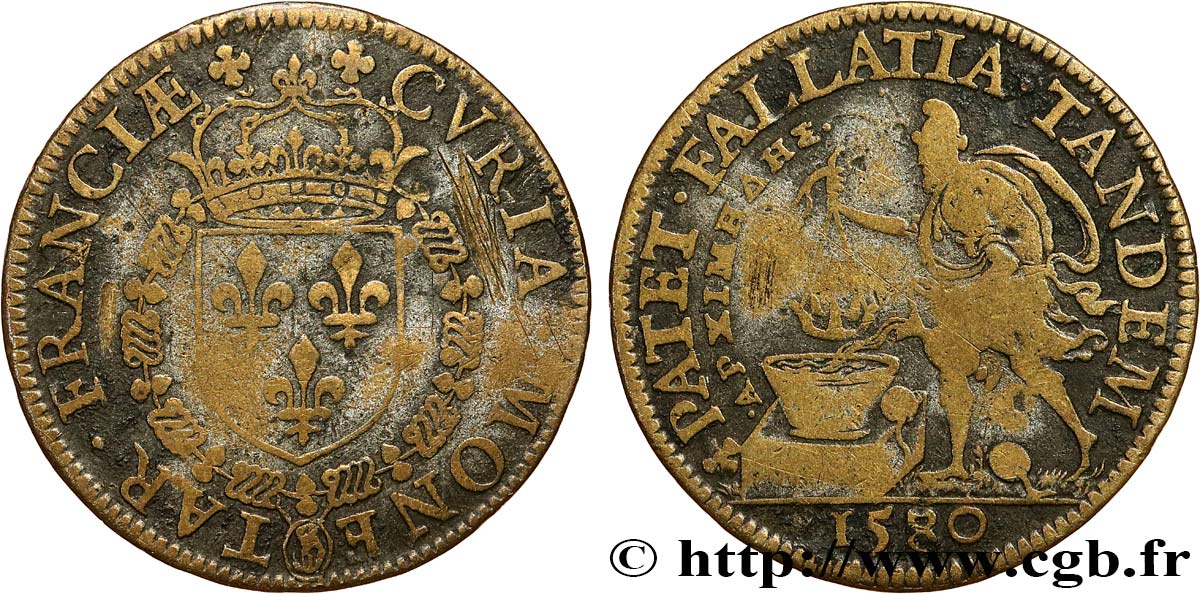
E-auction 631-628660 - fjt_1027185 - COUR DES MONNAIES DE PARIS HENRI III 1580
得先注册又得到批准才可以报价。为了报价注册. 客户应该得到公司允许,那种过程需要 48 个小时。别等出售结束那一天才登记。您报价的话等于您赞成买那物品,而且按« 保价 » 证明您接受 cgb.fr 因特网拍卖使用法.
报价时只可以出全数值欧元总额。物品描述也说明销售结束时间,结束后出价都不会生效。 报价命令转达有时变动,等到最后秒钟增加否决的可能会。想多了解的话请注意 因特网拍卖常问
购货人不付费
购货人不付费
| 估算 : | 60 € |
| 价格 : | 11 € |
| 最高出价 : | 12 € |
| 拍卖结束日期 : | 19 May 2025 20:09:40 |
| 竞拍人 : | 4 竞拍人 |
种类 HENRI III
日期: 1580
材质 brass
直径 28,5 mm
模子方针 6 h.
重量 4,42 g.
侧面 lisse
稀少度 R2
关于品相的说明
Patine hétérogène avec de l’usure sur les reliefs. Présence de rayures
正面
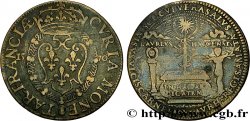
正面的文字 CURIA. MONETAR. FRANCIAE.
正面的说明书 Écu de France couronné et entouré du collier de l'ordre de St Michel.
正面的翻译 (Cour des monnaies de France).
背面
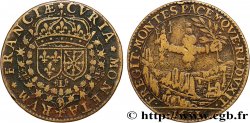
背面的文字 PATET. FALLACIA. TANDEM ; À L'EXERGUE : 1580.
背面的说明书 Archimède debout à gauche, fait l'expérience de la couronne du roi Hiéron dans l'eau.
背面的翻译 Il découvre cependant le principe du phénomène.
评论
Au XVIe siècle, la Cour des monnaies de Paris fit frapper une grande diversité de jetons dont les motifs changeaient presque chaque année. L'iconographie du revers fait allusion à la découverte de l'hydrostatique par Archimède et à son fameux théorème : le roi de Syracuse, Hiéron, soupçonnant un orfèvre de lui avoir fabriqué une couronne d'or, frauduleusement alliée d'argent, demanda à Archimède de déterminer s'il y avait eu fraude sans détruire la couronne. Après maintes réflexions il trouva la solution dans sa baignoire. Le revers représente Archimède trempant la couronne de Hiéron dans une bassine afin d'en déterminer la densité.
In the 16th century, the Paris Mint minted a wide variety of tokens, the designs of which changed almost every year. The reverse iconography alludes to Archimedes' discovery of hydrostatics and his famous theorem: the king of Syracuse, Hiero, suspecting a goldsmith of having made him a gold crown, fraudulently alloyed with silver, asked Archimedes to determine whether there had been fraud without destroying the crown. After much thought, he found the solution in his bathtub. The reverse depicts Archimedes dipping Hiero's crown into a basin to determine its density.
In the 16th century, the Paris Mint minted a wide variety of tokens, the designs of which changed almost every year. The reverse iconography alludes to Archimedes' discovery of hydrostatics and his famous theorem: the king of Syracuse, Hiero, suspecting a goldsmith of having made him a gold crown, fraudulently alloyed with silver, asked Archimedes to determine whether there had been fraud without destroying the crown. After much thought, he found the solution in his bathtub. The reverse depicts Archimedes dipping Hiero's crown into a basin to determine its density.
历史细节
COUR DES MONNAIES DE PARIS
(1552-1791)
In the Middle Ages, the Chamber of coins, located in the Palace, in the same premises as the Chamber of Accounts, was responsible for monitoring mints.. In 1522, Francis I gave it the powers of a real court to judge cases relating to counterfeit coin.. In 1552, Henry II erected this Chamber into a sovereign court, better known as the Cour des coins de Paris. The Court of coins of Paris had, in addition to its judicial powers, a political function (remonstrances, drafting of certain edicts. . . ) and control over weights and measures (it kept in particular the so-called "Charlemagne" pile). From 1704 to 1771 it gave up part of its jurisdiction in favor of the Cour des coins de Lyon. The Paris coin Court was abolished in 1791, during the Revolution. The Provost General of coins was a company responsible for policing coins and enforcing the judgments of the Cour des coins in the 17th and 18th centuries.. At its head, the provost general of the coins was an officer established to know the crimes of counterfeit coin and to instruct summarily the trials of counterfeit coin, the proceedings of which were then presented to the Court of the coins.
 对产品描述纠错
 打印
打印 分享我的选择
 提问
提问 Consign / sell
类似物品
 产品介绍
产品介绍
Your Recently Viewed Items
5000 Francs Spécimen COMOROS 1960 P.06s UNC-
1860.00 €
10 Francs MADAGASCAR 1948 P.036 UNC-
40.00 €

5 Francs Cabasson violet MARTINIQUE 1934 P.06 VF+
100.00 €

LICINIUS II Follis ou nummus XF
12.00 €
LOUIS XIII Vaquette, 2e type 1637 Morlaàs VF
390.00 €

LUCANIA - VELIA Nomos ou Didrachme AU
1103.00 €
cgb.fr 集币


