


fjt_235047 - FREEMASONRY LA CLÉMENTE AMITIÉ n.d.
无库存.
所有在网站上销售的产品 (2010)
价格 : 90.00 €
所有在网站上销售的产品 (2010)
价格 : 90.00 €
种类 LA CLÉMENTE AMITIÉ
日期: n.d.
材质 silver
直径 27,5 mm
模子方针 12 h.
侧面 lisse
稀少度 R1
出版目录中的项代码 :
正面
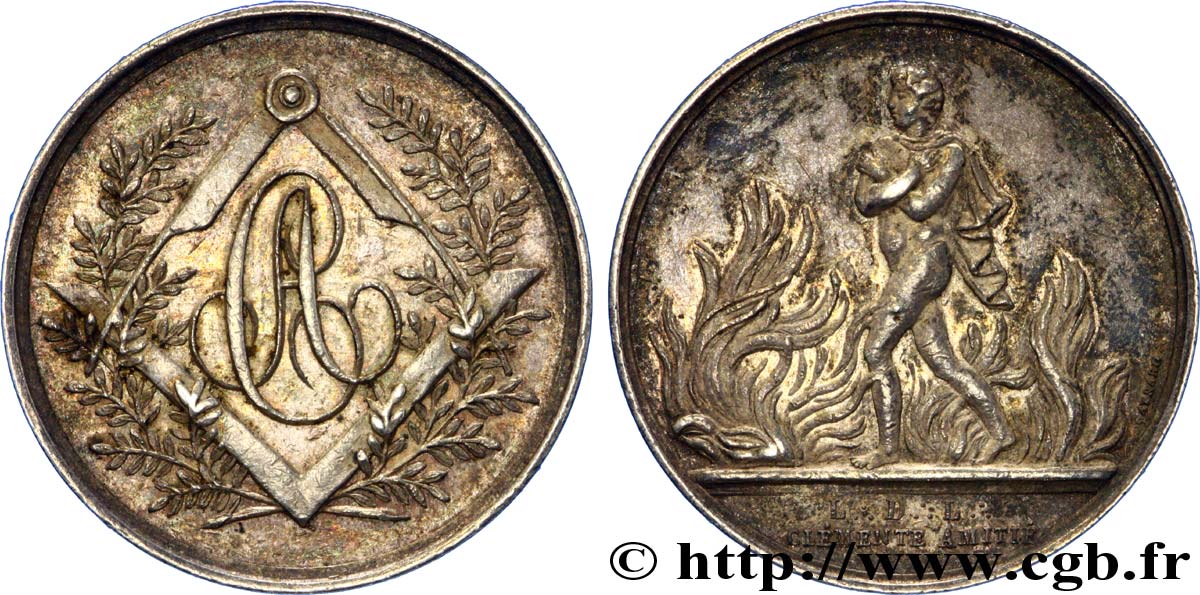
正面的文字 L.:. D.:. L.:. CLÉMENTE AMITIÉ.
正面的说明书 Personnage nu dans les flammes allant à gauche et s’en protégeant, une petite cape sur les épaules, signé GAYRARD.
背面
背面的说明书 Compas et équerre entrecroisés sur une couronne ouverte d’acacia, au centre en monogramme CA.
评论
Le symbolisme de l’avers nous reste énigmatique (ni nu, ni vêtu ?) ... Marc Labouret consacre un gros article à cette loge dont il n’hésite pas à dire qu’elle est l’une des plus importantes du XIXe siècle avec Victor Schoelcher, Camille Pelletan ou Eugène le Roy .
La franc-maçonnerie s’implante en France aux alentours du premier quart du XVIIIe s. sous l’influence d’aristocrates anglais. Initiatique, elle est fondée sur le rite hiramique, du nom d’Hiram de Tyr, personnage biblique, architecte du roi Salomon sur le chantier du Temple et qui a résisté à la torture sans livrer ses secrets. Hiram a aussi donné un point de départ du calendrier maçonnique commençant 4000 ans avant le calendrier chrétien. Les symboles servent de signes de reconnaissance entre les initiés, notamment des outils de constructeur de cathédrales (équerre, compas, niveau, maillet, etc.), des formes (triangle, étoile), des nombres (trois, cinq, sept) et des lettres.
The symbolism of the obverse remains enigmatic to us (neither naked nor clothed?) ... Marc Labouret devotes a large article to this lodge which he does not hesitate to say is one of the most important of the 19th century with Victor Schoelcher, Camille Pelletan or Eugène le Roy. Freemasonry was established in France around the first quarter of the 18th century under the influence of English aristocrats. Initiatory, it is based on the Hiramic rite, named after Hiram of Tyre, a biblical character, architect of King Solomon on the construction site of the Temple and who resisted torture without revealing his secrets. Hiram also gave a starting point for the Masonic calendar beginning 4000 years before the Christian calendar. Symbols serve as signs of recognition between initiates, including cathedral builder's tools (square, compass, level, mallet, etc.), shapes (triangle, star), numbers (three, five, seven) and letters
La franc-maçonnerie s’implante en France aux alentours du premier quart du XVIIIe s. sous l’influence d’aristocrates anglais. Initiatique, elle est fondée sur le rite hiramique, du nom d’Hiram de Tyr, personnage biblique, architecte du roi Salomon sur le chantier du Temple et qui a résisté à la torture sans livrer ses secrets. Hiram a aussi donné un point de départ du calendrier maçonnique commençant 4000 ans avant le calendrier chrétien. Les symboles servent de signes de reconnaissance entre les initiés, notamment des outils de constructeur de cathédrales (équerre, compas, niveau, maillet, etc.), des formes (triangle, étoile), des nombres (trois, cinq, sept) et des lettres.
The symbolism of the obverse remains enigmatic to us (neither naked nor clothed?) ... Marc Labouret devotes a large article to this lodge which he does not hesitate to say is one of the most important of the 19th century with Victor Schoelcher, Camille Pelletan or Eugène le Roy. Freemasonry was established in France around the first quarter of the 18th century under the influence of English aristocrats. Initiatory, it is based on the Hiramic rite, named after Hiram of Tyre, a biblical character, architect of King Solomon on the construction site of the Temple and who resisted torture without revealing his secrets. Hiram also gave a starting point for the Masonic calendar beginning 4000 years before the Christian calendar. Symbols serve as signs of recognition between initiates, including cathedral builder's tools (square, compass, level, mallet, etc.), shapes (triangle, star), numbers (three, five, seven) and letters
历史细节
FREEMASONRY
The compass and the square are very often associated in an ambivalent symbol of balance: fixity and mobility, passive and active, matter and spirit.. The compass is the tool of the Creator and of the great Architect of the Universe. The spacing of the branches of the compass obeys precise rules and varies according to the three degrees: apprentice, companion, master. The Napoleonic era, in the activity of lodges as in that of many groups, saw a flowering after the terrible years of the revolutionary period. Masonic activity, rid of its republican theories and firmly controlled by a Grand-Master appointed by the Emperor, experienced a vigor in unity never found since.. It is considered that each regiment, each garrison, each city had its Lodge. The testimonies that the sumptuous tokens of the period leave us show that these lodges were rich and influential.. The symbolism is sought after, without comparison with the later eras, which were much more conventional, even bland or destitute at the beginning of the 20th century.. Freemasonry had more than a thousand lodges spread over one hundred and thirty departments and more than sixty thousand Brothers.
 对产品描述纠错
 打印
打印 分享我的选择
 提问
提问 Consign / sell
类似物品
 产品介绍
产品介绍
Your Recently Viewed Items

FREEMASONRY AU
53.36 €

DIRECTOIRE BONAPARTE XF
25.00 €
cgb.fr 集币


