


bgr_852034 - PAMPHYLIA - PERGE Tétradrachme
950.00 €约 7115.50 CNY
数量
加入购物车

种类 Tétradrachme
日期: c. 212-211 AC.
铸币厂名称/城市 Pergé, Pamphylie
材质 silver
直径 29,5 mm
模子方针 12 h.
重量 16,68 g.
稀少度 R2
关于品相的说明
Monnaie idéalement centrée, légèrement tréflée au droit. Très beau revers, bien venu à la frappe. Petite marque de coup à 3h au revers. Patine grise avec de légers reflets dorés
正面
正面的文字 ANÉPIGRAPHE.
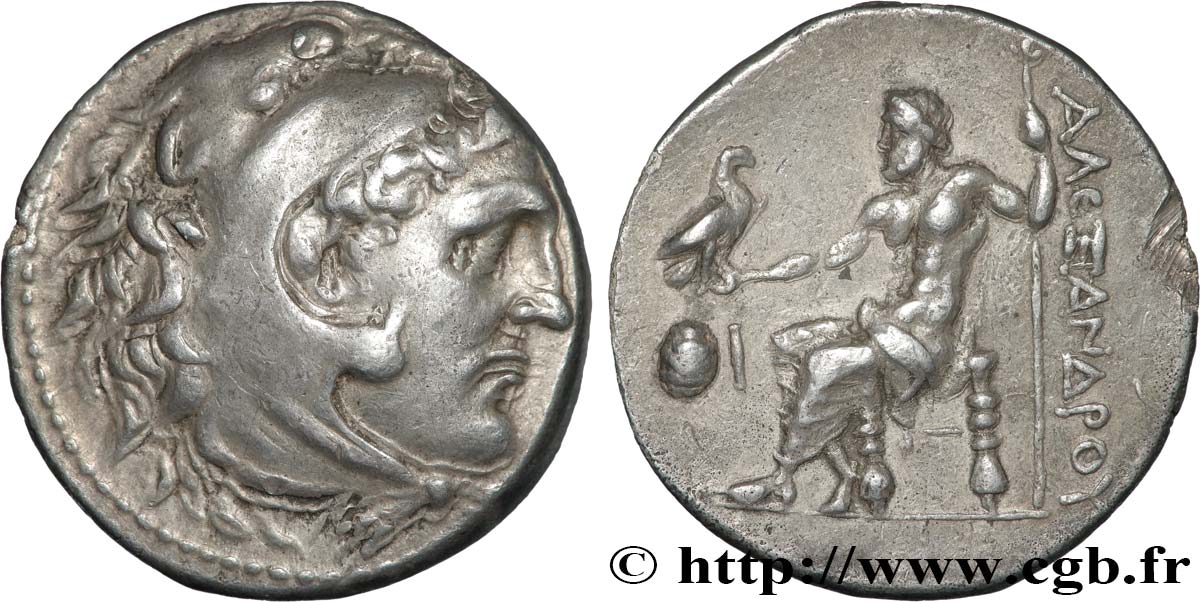
正面的说明书 Tête d'Héraklès à droite, coiffée de la léonté, nouée sous le cou.
背面
背面的说明书 Zeus aétophore assis à gauche sur un trône sans dossier, les jambes croisées, nu jusqu'à la ceinture, tenant un aigle posé sur sa main droite et un long sceptre bouleté de la gauche ; dans le champ à gauche, une pomme de pin.
背面铭文 ALEXANDROU/ I
历史细节
PAMPHYLIA - PERGA
(221-188 BC)
Coinage in the name of Alexander III the Great type
Perge was an important city in Pamphylia located between the Kestros and Katarrhaktes rivers. The city was famous for its temple of Artemis and the cult that was returned to him. Pamphylia and Perge were the object of fratricidal struggles between Lagides and Seleucids. Perge had entered Egyptian orbit in the first quarter of the 3rd century BC before returning to Seleucid rule around 253 BC during the reign of Antiochus II (261-246 AC.) . Ptolemy III succeeded in reconquering it in 241 BC but it was no longer part of the Lagid conquests in 221 BC at the start of the reign of Ptolemy IV (221-204 AC.). Pergé seems to have become a free city which would then explain the use of a new era. Perge would at least have recognized the authority of the new Seleucid king, Antiochus III (223-187 BC). After the Battle of Magnesia in 190 BC and the proclamation of the freedom of the Pamphylian cities the following year by Cn. Manlius, Perge was attributed by the Treaty of Apamea (188 BC) to the Attalid kingdom of Eumenes II (197-160 BC).
 对产品描述纠错
 打印
打印 分享我的选择
 提问
提问 Consign / sell
 产品介绍
产品介绍

cgb.fr 集币


