


bgr_1091556 - DANUBIAN CELTS - TETRADRACHMS IMITATIONS OF PHILIP II AND HIS SUCCESSORS Tétradrachme au cavalier, imitation de Philippe II

无库存.
所有在网站上销售的产品 (2026)
价格 : 500.00 €
所有在网站上销售的产品 (2026)
价格 : 500.00 €
种类 Tétradrachme au cavalier, imitation de Philippe II
日期: c. 320-280 AC.
材质 silver
直径 25 mm
模子方针 3 h.
重量 14,16 g.
稀少度 R2
关于品相的说明
Belle drachme bien centrée. Patine grise
出版目录中的项代码 :
家谱
Provient de la collection du Colonel Jean-Paul Beaulieu
正面
正面的文字 ANÉPIGRAPHE.
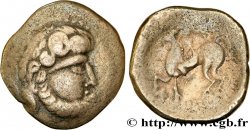
正面的说明书 Tête laurée de Zeus à droite ; grènetis.
背面
背面的说明书 Cavalier au pas à droite, tenant une palme de la main droite ; le cheval lève l'antérieur à droite, encadrée d’une lettre, d’une torche de course et d’un dauphin ; au-dessus du cavalier, la légende.
背面铭文 FILIP-.-U/ L
背面的翻译 (de Philippe).
评论
Imitation de l’atelier d’Amphipolis avec le lambda et la torche de course sous le cheval au revers. Si le statère d'or de Philippe II de Macédoine a servi de prototype à de nombreuses imitations gauloises, le tétradrachme n'a pas été imité en Gaule, mais reste principal sujet d'inspiration des monnaies pour les Celtes du Danube (LT. 9697-9767, 9768-9832, 9618-9630, 9870-9886). Les premières imitations furent frappées dans le premier quart du IIIe siècle avant J.-C. La fabrication des copies serviles, puis des imitations, enfin des frappes celtiques continuèrent pendant plus de deux siècles.
Imitation of the Amphipolis mint with the lambda and the racing torch under the horse on the reverse. If the gold stater of Philip II of Macedon served as a prototype for many Gallic imitations, the tetradrachm was not imitated in Gaul, but remains the main source of inspiration for coins for the Danube Celts (LT. 9697-9767, 9768-9832, 9618-9630, 9870-9886). The first imitations were struck in the first quarter of the 3rd century BC. The manufacture of servile copies, then imitations, and finally Celtic strikes continued for more than two centuries
Imitation of the Amphipolis mint with the lambda and the racing torch under the horse on the reverse. If the gold stater of Philip II of Macedon served as a prototype for many Gallic imitations, the tetradrachm was not imitated in Gaul, but remains the main source of inspiration for coins for the Danube Celts (LT. 9697-9767, 9768-9832, 9618-9630, 9870-9886). The first imitations were struck in the first quarter of the 3rd century BC. The manufacture of servile copies, then imitations, and finally Celtic strikes continued for more than two centuries
历史细节
DANUBIAN CELTS - IMITATIONS OF THE TETRADRACHMS OF PHILIP II AND HIS SUCCESSORS
(3rd-1st century BC)
Under this title are generally grouped all the coinages that do not have a precise attribution. Sometimes the term "Eastern Celts" is offered. After the Celts plundered Delphi and spread through Greece and Asia Minor, they seized a significant amount of spoils, thanks to their plunder. The Hellenistic kings, Diadoques or Epigones, used them as mercenaries in their armies where the average salary was normally one stater of gold corresponding to five tetradrachms of Attic standard or twenty drachms. The prototypes which represented the head of Zeus with a horseman were widely copied and imitated throughout the Balkans, northern Macedonia and Thrace. The final phase of the coinage occurs at the end of the 2nd century or the beginning of the first century BC where there are no traces of the obverse and the reverse as well as legends more than a domed face of a coin. practically smooth on both sides.
 对产品描述纠错
 打印
打印 分享我的选择
 提问
提问 Consign / sell
类似物品
 产品介绍
产品介绍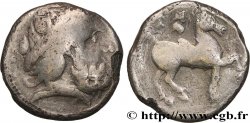


Your Recently Viewed Items

DANUBIAN CELTS - TETRADRACHMS IMITATIONS OF PHILIP II AND HIS SUCCESSORS Tétrad
500.00 €
cgb.fr 集币


