


E-auction 112-59640 - bpv_305256 - HADRIAN Tétradrachme syro-phénicien
得先注册又得到批准才可以报价。为了报价注册. 客户应该得到公司允许,那种过程需要 48 个小时。别等出售结束那一天才登记。您报价的话等于您赞成买那物品,而且按« 保价 » 证明您接受 cgb.fr 因特网拍卖使用法.
报价时只可以出全数值欧元总额。物品描述也说明销售结束时间,结束后出价都不会生效。 报价命令转达有时变动,等到最后秒钟增加否决的可能会。想多了解的话请注意 因特网拍卖常问
购货人不付费
购货人不付费
| 估算 : | 180 € |
| 价格 : | 68 € |
| 最高出价 : | 92 € |
| 拍卖结束日期 : | 08 June 2015 16:08:30 |
| 竞拍人 : | 10 竞拍人 |
种类 Tétradrachme syro-phénicien
日期: 119
铸币厂名称/城市 Antioche, Syrie, Séleucie et Piérie
材质 silver
直径 25 mm
模子方针 6 h.
重量 13,84 g.
出版目录中的项代码 :
家谱
Cet exemplaire est le 0157_018, il provient de la trouvaille dite de Banias
正面
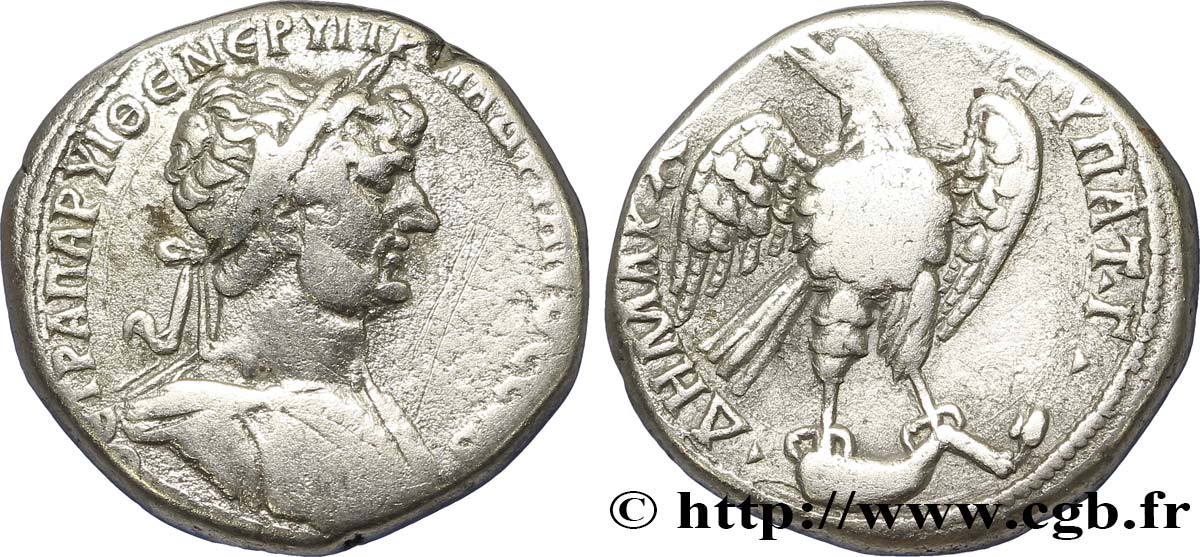
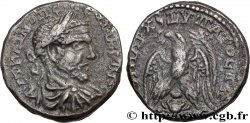
正面的说明书 Buste fin, lauré et cuirassé, d’Hadrien à droite vu de trois-quarts de face, l’un des rubans sur l’épaule, l’autre derrière la tête.
正面铭文 AUT KAI QE TRA PAR UI QE NER UI TRAI ADRIANOS SEB
正面的翻译 (L'empereur césar fils du divin Trajan le Parthique, fils du divin Nerva, Trajan Hadrien auguste).
背面
背面的说明书 Aigle élancé debout à droite, tête et queue à gauche, sur un cuissot d’animal sacrificiel, les ailes déployées.
背面铭文 DHMARC EX UPAT . G
背面的翻译 (Tribun du Peuple, Consul pour la troisième fois).
评论
Une observation plus fine de ce type a permis de détecter deux marqueurs variés, peut-être significatifs : la position des rubans et les détails du haut de la poitrine.
Durant l’an 2, les rubans sont systématiquement derrière la tête et le buste est cuirassé alors que pour l’an 3 on constate deux positions : le Prieur 157, suivant l’illustration du livre, a un ruban derrière la tête et l’autre sur l’épaule ; le 157A, en revanche, a les deux rubans derrière la tête. Cette variante se décompose en deux imagos, la première, 157A, montre un plastron de cuirasse renforcé sous le cou et parfaitement droit. La seconde montre un trait courbe : manifestement un drapé couvrant la cuirasse. Tous les exemplaires 157 donc avec un ruban sur l’épaule ont le cou nu. Logiquement, il y eut trois imagos différentes pendant cette troisième année.
Deuxième année de l’émission d’Antioche sur tous les nouveaux standards récemment établis : légendes à messages politiques, aigle “vivant” en attitude d’envol et non hiératique cuissot sacrificiel dans les serres, disparition de la palme dans le champ, axe à 6 heures.
Le graveur a changé par rapport à l’émission précédente et cette frappe, comme la précédente du deuxième consulat, est la dernière frappe à motivations économiques, donc en quantité importante, avant les frappes des Sévères. Il faut croire que l’afflux de tétradrachmes de Trajan aux types de l’aigle, de la Tyché et du Melqart fut suffisant pour alimenter le marché pendant trois quarts de siècle, aidés en cela par les très importantes frappes de Césarée de Cappadoce.
On note que les sigma sont gravés en C.
Dans la base TSP dix-huit exemplaires sont maintenant répertoriés pour le type 157 “pur”, dont en musées ANS et Berlin.
A closer observation of this type allowed the detection of two varied, perhaps significant, markers: the position of the ribbons and the details of the upper chest..
During year 2, the ribbons are systematically behind the head and the bust is armored, whereas for year 3 we see two positions: Prior 157, following the illustration in the book, has one ribbon behind the head and the other on the shoulder; 157A, on the other hand, has both ribbons behind the head.. This variant is divided into two images, the first, 157A, shows a breastplate reinforced under the neck and perfectly straight. The second shows a curved line: clearly a drape covering the breastplate. All examples 157 therefore with a ribbon on the shoulder have a bare neck. Logically, there were three different imagos during this third year.
Second year of the Antioch issue on all the new standards recently established: legends with political messages, “living” eagle in a flight attitude and not hieratic, sacrificial haunch in the talons, disappearance of the palm in the field, axis at 6 o’clock.
The engraver has changed compared to the previous issue and this strike, like the previous one from the second consulate, is the last strike with economic motives, therefore in significant quantity, before the strikes of the Severans. It must be believed that the influx of Trajan's tetradrachms with the eagle, Tyche and Melqart types was sufficient to supply the market for three-quarters of a century, helped in this by the very important strikes of Caesarea in Cappadocia..
Note that the sigmas are engraved in C.
In the TSP database eighteen examples are now listed for the “pure” type 157, including in ANS and Berlin museums
Durant l’an 2, les rubans sont systématiquement derrière la tête et le buste est cuirassé alors que pour l’an 3 on constate deux positions : le Prieur 157, suivant l’illustration du livre, a un ruban derrière la tête et l’autre sur l’épaule ; le 157A, en revanche, a les deux rubans derrière la tête. Cette variante se décompose en deux imagos, la première, 157A, montre un plastron de cuirasse renforcé sous le cou et parfaitement droit. La seconde montre un trait courbe : manifestement un drapé couvrant la cuirasse. Tous les exemplaires 157 donc avec un ruban sur l’épaule ont le cou nu. Logiquement, il y eut trois imagos différentes pendant cette troisième année.
Deuxième année de l’émission d’Antioche sur tous les nouveaux standards récemment établis : légendes à messages politiques, aigle “vivant” en attitude d’envol et non hiératique cuissot sacrificiel dans les serres, disparition de la palme dans le champ, axe à 6 heures.
Le graveur a changé par rapport à l’émission précédente et cette frappe, comme la précédente du deuxième consulat, est la dernière frappe à motivations économiques, donc en quantité importante, avant les frappes des Sévères. Il faut croire que l’afflux de tétradrachmes de Trajan aux types de l’aigle, de la Tyché et du Melqart fut suffisant pour alimenter le marché pendant trois quarts de siècle, aidés en cela par les très importantes frappes de Césarée de Cappadoce.
On note que les sigma sont gravés en C.
Dans la base TSP dix-huit exemplaires sont maintenant répertoriés pour le type 157 “pur”, dont en musées ANS et Berlin.
A closer observation of this type allowed the detection of two varied, perhaps significant, markers: the position of the ribbons and the details of the upper chest..
During year 2, the ribbons are systematically behind the head and the bust is armored, whereas for year 3 we see two positions: Prior 157, following the illustration in the book, has one ribbon behind the head and the other on the shoulder; 157A, on the other hand, has both ribbons behind the head.. This variant is divided into two images, the first, 157A, shows a breastplate reinforced under the neck and perfectly straight. The second shows a curved line: clearly a drape covering the breastplate. All examples 157 therefore with a ribbon on the shoulder have a bare neck. Logically, there were three different imagos during this third year.
Second year of the Antioch issue on all the new standards recently established: legends with political messages, “living” eagle in a flight attitude and not hieratic, sacrificial haunch in the talons, disappearance of the palm in the field, axis at 6 o’clock.
The engraver has changed compared to the previous issue and this strike, like the previous one from the second consulate, is the last strike with economic motives, therefore in significant quantity, before the strikes of the Severans. It must be believed that the influx of Trajan's tetradrachms with the eagle, Tyche and Melqart types was sufficient to supply the market for three-quarters of a century, helped in this by the very important strikes of Caesarea in Cappadocia..
Note that the sigmas are engraved in C.
In the TSP database eighteen examples are now listed for the “pure” type 157, including in ANS and Berlin museums
历史细节
HADRIAN
(08/11/117-07/10/138)
Hadrian was born in 76 in Italica. Pupil of Trajan, he married in 100 Sabine, grand-niece of the emperor, and made a career in the staff of the latter, in particular during the Dacian campaign. In 117, he succeeded Trajan, and traveled for twenty years, visiting the entire empire - the only Emperor to have lent himself to this exercise. In 122, Hadrian went to Spain. Childless, he first chose Aélius to succeed him in 136, but the latter died on January 1, 138. Hadrian then adopted Antonin on February 25 and himself chose Marcus Aurelius and Lucius Verus as Antoninus' heirs. He died on July 10, 138.
 对产品描述纠错
 打印
打印 分享我的选择
 提问
提问 Consign / sell
 产品介绍
产品介绍



Your Recently Viewed Items
50 Rupiah INDONESIA 1957 P.050a AU
98.00 €
MACRINUS Tétradrachme syro-phénicien XF
280.00 €
cgb.fr 集币


