


bpv_173688 - MACRINUS Tétradrachme syro-phénicien

无库存.
所有在网站上销售的产品 (2014)
价格 : 350.00 €
所有在网站上销售的产品 (2014)
价格 : 350.00 €
种类 Tétradrachme syro-phénicien
日期: 217-218
铸币厂名称/城市 Hiérapolis, Syrie, Cyrrhestica
材质 billon
直径 25 mm
模子方针 11 h.
重量 11,18 g.
稀少度 R1
关于品相的说明
Très mauvais centrage et flan oblong, très beau portrait bien en relief
出版目录中的项代码 :
正面
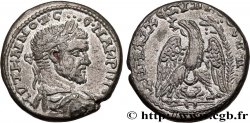
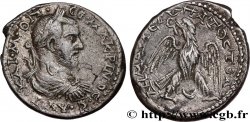
正面的说明书 Buste de Macrin à droite, lauré et drapé, vu de trois-quarts en avant, les deux rubans pendant derrière la tête (A*01).
正面铭文 AUT K. M. OPEL... SE. MAKREINOS SE, (Autokratoros Kaisaros Markos Opellios Seuhros Makrinos Sebastos)
正面的翻译 (L’empereur césar Marc Opel Sévère Macrin auguste).
背面
背面的说明书 Aigle debout à gauche, ailes écartées, la tête et la queue à droite, tenant une couronne feuillée dans son bec ; entre les pattes, un lion passant à droite.
背面铭文 DHMARC. EX. UPATOS
背面的翻译 (Revêtu de la puissance tribunitienne consul).
评论
Les frappes de Macrin à Hiérapolis sont assez nombreuses mais bien inférieures à celles de Caracalla et de Diaduménien, dont c’est l’atelier le plus productif, devant même Antioche.
On repère deux graveurs de droit et plusieurs graveurs de revers, une étude des liaisons de coins serait certainement instructive sur la structure de l’émission.
Hiérapolis, "la ville du Soleil" où se trouvait le temple d'Astarté construit par Séleucos Ier Nicator, l'actuelle Manbidj, était située près de l'Euphrate entre Berœa (Alep) à l'ouest et Carrhæ (Harran) à l'Est sur la route des caravanes aux portes de la province de Mésopotamie en Syrie Cyrrhestica.
HIérapolis est un atelier important pour Caracalla mais, curieusement, avec une production concentrée sur le type à droite, drapé et cuirassé, toutes les autres variantes étant frappées en quantités minimes.
L’attribution est certaine : le graveur spécifique à l’atelier se retrouve sur la frappe de présentation avec Hadad et Atargatis trônant avec le semeion, type qui ne peut qu’être attribué à Hiérapolis. La frappe de présentation porte aussi un petit aigle et le symbole du lion passant, aucun doute n’est donc possible.
On notera sur certaines représentations un lion d’une taille relativement importante et d’une qualité de gravure tout à fait remarquable. Il existait probablement encore des lions vivant à l’état sauvage à cette époque dans la région, également des réserves de chasse (paradeisos) où l’artiste a pu observer parfaitement le modèle.
On note que les sigma sont gravés en C.
Dans la base TSP maintenue par Michel Prieur, seize exemplaires sont maintenant répertoriés. Cet exemplaire, qui provient de la trouvaille dite de Syrie 1930, est le 0943_003.
The strikes of Macrinus at Hierapolis are quite numerous but much inferior to those of Caracalla and Diadumenian, of which it is the most productive workshop, even ahead of Antioch..
We can identify two obverse engravers and several reverse engravers; a study of the die links would certainly be instructive on the structure of the issue..
Hierapolis, \\\"the city of the Sun\\\" where the temple of Astarte was located, built by Seleucus I Nicator, modern Manbij, was located near the Euphrates between Berœa (Aleppo) to the west and Carrhae (Harran) to the east on the caravan route to the gates of the province of Mesopotamia in Syria Cyrrhestica.
Hierapolis is an important mint for Caracalla but, curiously, with production concentrated on the right-hand type, draped and cuirassed, all other variants being struck in minimal quantities.
The attribution is certain: the specific engraver of the workshop is found on the presentation strike with Hadad and Atargatis enthroned with the semeion, a type which can only be attributed to Hierapolis. The presentation strike also bears a small eagle and the symbol of the lion passant, so there is no doubt.
We will note on certain representations a lion of a relatively large size and of a quite remarkable quality of engraving. There were probably still lions living in the wild in the region at that time, as well as hunting reserves (paradeisos) where the artist was able to observe the model perfectly..
Note that the sigmas are engraved in C.
In the TSP database maintained by Michel Prieur, sixteen examples are now listed. This example, which comes from the so-called Syria 1930 find, is 0943_003
On repère deux graveurs de droit et plusieurs graveurs de revers, une étude des liaisons de coins serait certainement instructive sur la structure de l’émission.
Hiérapolis, "la ville du Soleil" où se trouvait le temple d'Astarté construit par Séleucos Ier Nicator, l'actuelle Manbidj, était située près de l'Euphrate entre Berœa (Alep) à l'ouest et Carrhæ (Harran) à l'Est sur la route des caravanes aux portes de la province de Mésopotamie en Syrie Cyrrhestica.
HIérapolis est un atelier important pour Caracalla mais, curieusement, avec une production concentrée sur le type à droite, drapé et cuirassé, toutes les autres variantes étant frappées en quantités minimes.
L’attribution est certaine : le graveur spécifique à l’atelier se retrouve sur la frappe de présentation avec Hadad et Atargatis trônant avec le semeion, type qui ne peut qu’être attribué à Hiérapolis. La frappe de présentation porte aussi un petit aigle et le symbole du lion passant, aucun doute n’est donc possible.
On notera sur certaines représentations un lion d’une taille relativement importante et d’une qualité de gravure tout à fait remarquable. Il existait probablement encore des lions vivant à l’état sauvage à cette époque dans la région, également des réserves de chasse (paradeisos) où l’artiste a pu observer parfaitement le modèle.
On note que les sigma sont gravés en C.
Dans la base TSP maintenue par Michel Prieur, seize exemplaires sont maintenant répertoriés. Cet exemplaire, qui provient de la trouvaille dite de Syrie 1930, est le 0943_003.
The strikes of Macrinus at Hierapolis are quite numerous but much inferior to those of Caracalla and Diadumenian, of which it is the most productive workshop, even ahead of Antioch..
We can identify two obverse engravers and several reverse engravers; a study of the die links would certainly be instructive on the structure of the issue..
Hierapolis, \\\"the city of the Sun\\\" where the temple of Astarte was located, built by Seleucus I Nicator, modern Manbij, was located near the Euphrates between Berœa (Aleppo) to the west and Carrhae (Harran) to the east on the caravan route to the gates of the province of Mesopotamia in Syria Cyrrhestica.
Hierapolis is an important mint for Caracalla but, curiously, with production concentrated on the right-hand type, draped and cuirassed, all other variants being struck in minimal quantities.
The attribution is certain: the specific engraver of the workshop is found on the presentation strike with Hadad and Atargatis enthroned with the semeion, a type which can only be attributed to Hierapolis. The presentation strike also bears a small eagle and the symbol of the lion passant, so there is no doubt.
We will note on certain representations a lion of a relatively large size and of a quite remarkable quality of engraving. There were probably still lions living in the wild in the region at that time, as well as hunting reserves (paradeisos) where the artist was able to observe the model perfectly..
Note that the sigmas are engraved in C.
In the TSP database maintained by Michel Prieur, sixteen examples are now listed. This example, which comes from the so-called Syria 1930 find, is 0943_003
历史细节
MACRINUS
(11/04/217-8/06/218)
Macrin was born in 164 in Cherchell in Mauretania. He is not a senator, but a knight, of indigenous (Moorish) origin. Procurator of the "res privata" (private fund of the Emperor) of Caracalla, he then became prefect of the Praetorium from 212. After the assassination of Caracalla on April 8, 217, he was acclaimed emperor on April 11. He will never come to Rome and remains in Antioch. He deifies Caracalla, but exiles Julia Domna, who lets herself die. He takes the title of Severus to rally the supporters of the Severian family to him and gives the prænomen of Antoninus to his son, Diadumenian, promoted to Caesar. Trying to conciliate everyone, he runs into the army, which misses Caracalla. Soldiers quartered in Emesa proclaimed Elagabalus on May 16, 218. Defeated in June, Macrinus fled. Hearing of the death of Diaduménien, he tries to commit suicide by throwing himself from his chariot and is finished off by his own soldiers..
 对产品描述纠错
 打印
打印 分享我的选择
 提问
提问 Consign / sell
类似物品
 产品介绍
产品介绍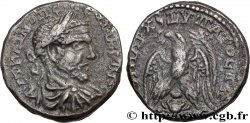


Your Recently Viewed Items
10 Centimes REUNION 1918 P.- XF+
380.00 €

ROMANO III ARGIRO Histamenon nomisma AU
441.00 €
cgb.fr 集币


