


Live auction - bmv_1076134 - TOURS (TVRONVS CIVITAS) Denier

得先注册又得到批准才可以报价。为了报价注册. 客户应该得到公司允许,那种过程需要 48 个小时。别等出售结束那一天才登记。您报价的话等于您赞成买那物品,而且按« 保价 » 证明您接受 cgb.fr 因特网拍卖使用法.
报价时只可以出全数值欧元总额。物品描述也说明销售结束时间,结束后出价都不会生效。 报价命令转达有时变动,等到最后秒钟增加否决的可能会。想多了解的话请注意 因特网拍卖常问
最高出价方将支付18%的不含税的拍卖费用
最高出价方将支付18%的不含税的拍卖费用
| 估算 : | 800 € |
| 价格 : | 580 € |
| 最高出价 : | 600 € |
| 拍卖结束日期 : | 03 March 2026 15:36:40 |
| 竞拍人 : | 2 竞拍人 |
种类 Denier
日期: fin du VIIIe siècle
日期: s.m.
铸币厂名称/城市 Marmoutier à Tours (37)
材质 silver
直径 11,5 mm
模子方针 7 h.
重量 1,03 g.
稀少度 R2
关于品相的说明
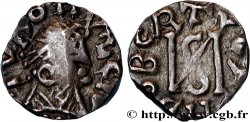
Ce denier est frappé sur un flan assez large et présente de hauts reliefs. Patine grise
出版目录中的项代码 :
正面
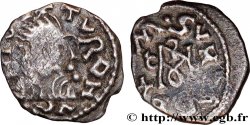
正面的说明书 Monogramme.
背面
背面的说明书 Croix ancrée.
评论
Ce denier est proche du Belfort 5671. Cette série est reprise par P. Schiesser dans son récent ouvrage sur le monnayage mérovingiens en argent, RT Sena n° 7, n° 49-51bis. Ce dernier remet en question l’attribution historique à Angers (cf. Monetae 1 pl. 7, p. 70) et met en valeur une “continuité visuelle” avec les deniers de Leugariaco. Depuis, nous avons montré que le monogramme du droit pourrait indiqué le monastère de Marmoutier. En effet, saint Martin se retira dans un ermitage à Marmoutier (actuellement Tours, au nord de la Loire). Un monastère y fut créé sur des ruines antiques. Il est bien attesté chez Grégoire de Tours (539-594) qui parle de “majus monasterium” (grand monastère). Ce monastère était autrefois en périphérie de Tours, d’où l’absence de référence à Tours (TVRONVS), mais la référence à Saint-Martin et au “grand monastère” par le biais du monogramme du droit. On retrouve en effet ce monogramme sur des deniers avec MOI SCI MARTIN (Monastère de saint Martin) et du monétaire Naudegiselo.
This denier is similar to Belfort 5671. This series is discussed by P. Schiesser in his recent work on Merovingian silver coinage, RT Sena no. 7, nos. 49-51bis. Schiesser challenges the historical attribution to Angers (cf. Monetae 1 pl. 7, p. 70) and highlights a “visual continuity” with the deniers of Leugariaco. Since then, we have shown that the monogram on the obverse could indicate the monastery of Marmoutier. Indeed, Saint Martin withdrew to a hermitage at Marmoutier (present-day Tours, north of the Loire). A monastery was established there on ancient ruins. It is well attested in Gregory of Tours (539-594), who speaks of a “majus monasterium” (great monastery). This monastery was once located on the outskirts of Tours, hence the absence of any reference to Tours (TVRONVS), but the reference to Saint Martin and the “great monastery” through the monogram on the obverse. This monogram is indeed found on coins bearing the inscription MOI SCI MARTIN (Monastery of Saint Martin) and the mint mark Naudegiselo.
This denier is similar to Belfort 5671. This series is discussed by P. Schiesser in his recent work on Merovingian silver coinage, RT Sena no. 7, nos. 49-51bis. Schiesser challenges the historical attribution to Angers (cf. Monetae 1 pl. 7, p. 70) and highlights a “visual continuity” with the deniers of Leugariaco. Since then, we have shown that the monogram on the obverse could indicate the monastery of Marmoutier. Indeed, Saint Martin withdrew to a hermitage at Marmoutier (present-day Tours, north of the Loire). A monastery was established there on ancient ruins. It is well attested in Gregory of Tours (539-594), who speaks of a “majus monasterium” (great monastery). This monastery was once located on the outskirts of Tours, hence the absence of any reference to Tours (TVRONVS), but the reference to Saint Martin and the “great monastery” through the monogram on the obverse. This monogram is indeed found on coins bearing the inscription MOI SCI MARTIN (Monastery of Saint Martin) and the mint mark Naudegiselo.
历史细节
TOURS (TURONUS CIVITAS)
(7th century)
The Tours workshop is one of the important production sites of the Merovingian period, with a special place for the Saint-Martin abbey and the cathedral church of Saint-Maurice. Over a period of nearly two centuries, the authors have identified 99 coins (45 triens and 54 deniers) minted for the city, Saint-Martin and Saint-Maurice.
 对产品描述纠错
 打印
打印 分享我的选择
 提问
提问 Consign / sell
类似物品
 产品介绍
产品介绍
Your Recently Viewed Items

100 Francs TUNISIA 1946 P.24 F-
49.00 €

100 Dong VIET NAM 1950 P.053b VF
15.00 €

PONTUS - KOMANA Tetrachalque XF
90.00 €

TOURS (TVRONVS CIVITAS) Denier AU
580.00 €
GALLIENUS Tétradrachme AU
160.00 €
CONSTANTIUS I Follis ou nummus XF
11.00 €
cgb.fr 集币


