


E-auction 173-107611 - bpv_154409 - TREBONIANUS GALLUS Tétradrachme syro-phénicien fauté
得先注册又得到批准才可以报价。为了报价注册. 客户应该得到公司允许,那种过程需要 48 个小时。别等出售结束那一天才登记。您报价的话等于您赞成买那物品,而且按« 保价 » 证明您接受 cgb.fr 因特网拍卖使用法.
报价时只可以出全数值欧元总额。物品描述也说明销售结束时间,结束后出价都不会生效。 报价命令转达有时变动,等到最后秒钟增加否决的可能会。想多了解的话请注意 因特网拍卖常问
购货人不付费
购货人不付费
| 估算 : | 180 € |
| 价格 : | 61 € |
| 最高出价 : | 63 € |
| 拍卖结束日期 : | 08 August 2016 15:14:00 |
| 竞拍人 : | 10 竞拍人 |
种类 Tétradrachme syro-phénicien fauté
日期: 251
铸币厂名称/城市 Antioche, Syrie, Séleucie et Piérie
材质 billon
直径 28 mm
模子方针 6 h.
重量 13,56 g.
关于品相的说明
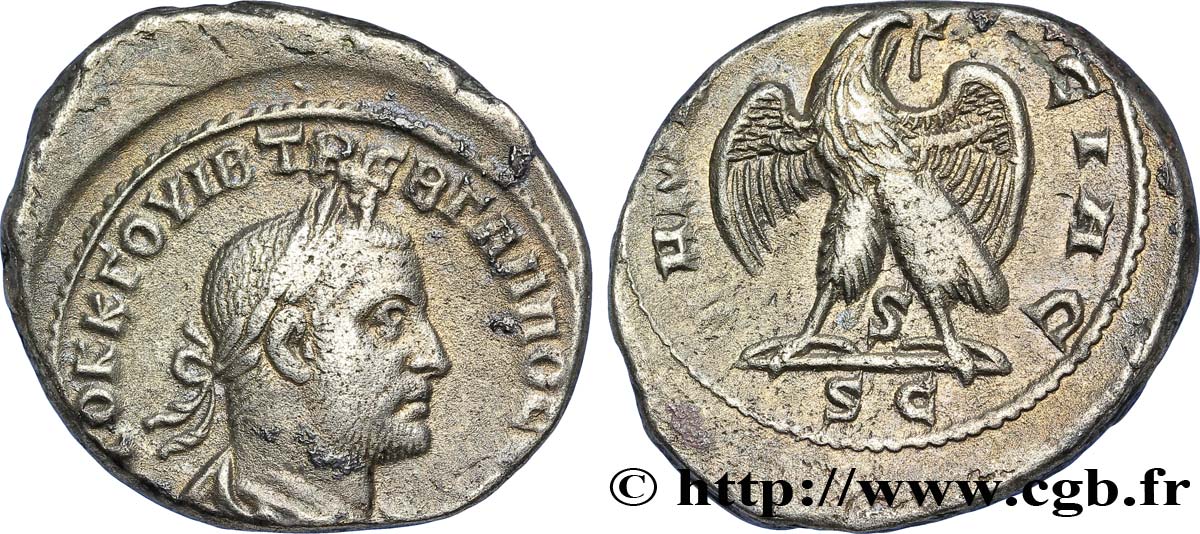
Légère usure, bonne couleur argent, décentré de frappe incroyable, de loin le pire jamais vu dans ces séries, le rebord du coin parfaitement net
出版目录中的项代码 :
家谱
Cet exemplaire est le 0665_018 de la base TSP
正面
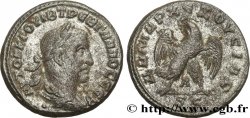
正面的说明书 Buste lauré, drapé et cuirassé de Trébonien Galle à droite, vu de trois quarts en arrière (A*2), S sous le buste.
正面铭文 AUTOK K G OUIB TREB GALLOS SEB
正面的翻译 (Imperator Cæsar Caius Vibius Trebonianus Gallus Augustus).
背面
背面的文字 S C À L’EXERGUE.
背面的说明书 Aigle debout à gauche sur une ligne de terre, les ailes déployées, tête et queue à droite, tenant une couronne feuillée dans son bec, lettre d’officine entre les pattes.
背面铭文 DHMARC EX OUSIAS / S
背面的翻译 (Revêtu de la puissance tribunitienne / avec l’accord du Sénat d’Antioche).
评论
La lettre S correspond au 6, la S étant la sixième lettre de l’alphabet grec, à noter que la graphie sur cette pièce correspond à notre S majuscule et non pas au sigma grec. La pièce est de la sixième officine.
Cet impressionnant fauté nous permet de connaitre l’aspect d’un flan monétaire, sous Trébonien Galle, à Antioche, avant sa frappe : il a déjà été laminé pratiquement à l’épaisseur finale. Sachant que nous voyons parfaitement le rebord du coin et que la zone au-delà de ce rebord ne semble pas porter de marque de frappe, elle était donc plate et laminée avant d’avoir été frappée. On peut présumer, compte tenu de l’absence de marque de découpage sur les tranches, que des boulettes de métal étaient laminées une à une, probablement après avoir été pesées et vérifiées, donc d’une manière très différente du travail par lames de métal que l’on verra longtemps après.
Les frappes de Trébonien Galle et de Volusien signent la fin de la série des tétradrachmes syro-phéniciens, si l’on ne tient pas compte du sursaut d’Uranius Antoninus. Cette courte frappe, 251/253, va concentrer tous les symptômes d’une fin, de l’effondrement de l’aloi à celui du style.
Notons tout d’abord les changements de fond : mis à part la complète disparition des bustes radiés qui sont réservés à Volusien, la palme disparaît et la position de l’aigle change.
Que pouvait représenter cette palme ?
Une autorité impliquée dans le financement du monnayage ? Dans ce cas, elle aurait passé les siècles et serait certainement d’essence religieuse puisque sa première apparition est dans la main de la Tyché de la ville. Le culte rendu à cette divinité était-il si important que les autorités auraient pu en mettre le clergé à contribution où requérir son aval ? Si tel est le cas, pourquoi Trébonien Galle aurait-il dérogé à l’habitude ? Pourquoi aurait-elle disparu sous les Sévères ?
On peut aussi penser à un raccourci symbolique de la Tyché mais pourquoi Trébonien aurait-il éliminé cette référence ? La question reste ouverte.
D’autant plus que le changement de position de l’aigle, où tête et queue sont maintenant systématiquement en position inverse du corps, rappelle immanquablement les rarissimes émissions finales de Trajan Dèce et de sa famille avec cette position et le point entre les pattes, remplacé chez Trébonien Galle par la lettre d’atelier. Il faut croire que les changements de type monétaire précèdent, dans l’Antioche du IIIe siècle, les chutes de régime : cela se vérifie de Philippe à Galle.
La première série de frappe est de 251 AD avec un revers sans marque de consulat. Tous les bustes sont laurés, drapés et cuirassés sauf un buste à gauche de la septième officine, le seul buste exceptionnel retrouvé à ce jour. La qualité des frappes et de l’aloi sont comparables aux standards de Trajan Dèce.
On note que les sigma sont gravés en C.
Dans la base TSP maintenue par Michel Prieur, trente-deux exemplaires sont maintenant répertoriés pour ce type dont en musées Paris, ANS (3), British Museum, Doura/Yale (5), Oxford, Berlin et Gaziantep.
The letter S corresponds to 6, S being the sixth letter of the Greek alphabet, note that the spelling on this piece corresponds to our capital S and not to the Greek sigma. The room is from the sixth pharmacy.
This impressive fault allows us to know the appearance of a coin blank, under Trebonianus Gallus, in Antioch, before its striking: it has already been rolled practically to the final thickness. Knowing that we can see the edge of the die perfectly and that the area beyond this edge does not appear to bear any striking marks, it was therefore flat and laminated before being struck. We can assume, given the absence of cutting marks on the edges, that balls of metal were rolled one by one, probably after having been weighed and checked, therefore in a very different way from the work using metal blades that we will see long after..
The strikes of Trebonianus Gallus and Volusianus mark the end of the series of Syro-Phoenician tetradrachms, if we do not take into account the surge of Uranius Antoninus. This short strike, 251/253, will concentrate all the symptoms of an end, from the collapse of the alloy to that of the style..
Let us first note the fundamental changes: apart from the complete disappearance of the radiate busts which are reserved for Volusien, the palm disappears and the position of the eagle changes.
What could this palm represent? An authority involved in financing the coinage? In this case, it would have survived the centuries and would certainly be of religious essence since its first appearance is in the hand of the city's Tyche.. Was the cult of this deity so important that the authorities could have called upon the clergy or sought their approval? If so, why would Trebonianus Gallus have deviated from the custom? Why would it have disappeared under the Severi? One could also think of a symbolic shortcut to Tyche, but why would Trebonianus have eliminated this reference? The question remains open..
All the more so since the change in position of the eagle, where the head and tail are now systematically in the opposite position to the body, inevitably recalls the extremely rare final emissions of Trajan Decius and his family with this position and the point between the legs, replaced in Trebonianus Galle by the workshop letter. It must be believed that changes in monetary type precede, in Antioch of the 3rd century, the falls of regime: this is verified from Philip to Galle.
The first strike series is from 251 AD with a reverse without a consulate mark. All the busts are laureate, draped and cuirassed except for one bust on the left of the seventh office, the only exceptional bust found to date.. The quality of the strikes and the alloy are comparable to the standards of Trajan Decius..
Note that the sigmas are engraved in C.
In the TSP database maintained by Michel Prieur, thirty-two examples are now listed for this type, including in museums in Paris, ANS (3), British Museum, Doura/Yale (5), Oxford, Berlin and Gaziantep
Cet impressionnant fauté nous permet de connaitre l’aspect d’un flan monétaire, sous Trébonien Galle, à Antioche, avant sa frappe : il a déjà été laminé pratiquement à l’épaisseur finale. Sachant que nous voyons parfaitement le rebord du coin et que la zone au-delà de ce rebord ne semble pas porter de marque de frappe, elle était donc plate et laminée avant d’avoir été frappée. On peut présumer, compte tenu de l’absence de marque de découpage sur les tranches, que des boulettes de métal étaient laminées une à une, probablement après avoir été pesées et vérifiées, donc d’une manière très différente du travail par lames de métal que l’on verra longtemps après.
Les frappes de Trébonien Galle et de Volusien signent la fin de la série des tétradrachmes syro-phéniciens, si l’on ne tient pas compte du sursaut d’Uranius Antoninus. Cette courte frappe, 251/253, va concentrer tous les symptômes d’une fin, de l’effondrement de l’aloi à celui du style.
Notons tout d’abord les changements de fond : mis à part la complète disparition des bustes radiés qui sont réservés à Volusien, la palme disparaît et la position de l’aigle change.
Que pouvait représenter cette palme ?
Une autorité impliquée dans le financement du monnayage ? Dans ce cas, elle aurait passé les siècles et serait certainement d’essence religieuse puisque sa première apparition est dans la main de la Tyché de la ville. Le culte rendu à cette divinité était-il si important que les autorités auraient pu en mettre le clergé à contribution où requérir son aval ? Si tel est le cas, pourquoi Trébonien Galle aurait-il dérogé à l’habitude ? Pourquoi aurait-elle disparu sous les Sévères ?
On peut aussi penser à un raccourci symbolique de la Tyché mais pourquoi Trébonien aurait-il éliminé cette référence ? La question reste ouverte.
D’autant plus que le changement de position de l’aigle, où tête et queue sont maintenant systématiquement en position inverse du corps, rappelle immanquablement les rarissimes émissions finales de Trajan Dèce et de sa famille avec cette position et le point entre les pattes, remplacé chez Trébonien Galle par la lettre d’atelier. Il faut croire que les changements de type monétaire précèdent, dans l’Antioche du IIIe siècle, les chutes de régime : cela se vérifie de Philippe à Galle.
La première série de frappe est de 251 AD avec un revers sans marque de consulat. Tous les bustes sont laurés, drapés et cuirassés sauf un buste à gauche de la septième officine, le seul buste exceptionnel retrouvé à ce jour. La qualité des frappes et de l’aloi sont comparables aux standards de Trajan Dèce.
On note que les sigma sont gravés en C.
Dans la base TSP maintenue par Michel Prieur, trente-deux exemplaires sont maintenant répertoriés pour ce type dont en musées Paris, ANS (3), British Museum, Doura/Yale (5), Oxford, Berlin et Gaziantep.
The letter S corresponds to 6, S being the sixth letter of the Greek alphabet, note that the spelling on this piece corresponds to our capital S and not to the Greek sigma. The room is from the sixth pharmacy.
This impressive fault allows us to know the appearance of a coin blank, under Trebonianus Gallus, in Antioch, before its striking: it has already been rolled practically to the final thickness. Knowing that we can see the edge of the die perfectly and that the area beyond this edge does not appear to bear any striking marks, it was therefore flat and laminated before being struck. We can assume, given the absence of cutting marks on the edges, that balls of metal were rolled one by one, probably after having been weighed and checked, therefore in a very different way from the work using metal blades that we will see long after..
The strikes of Trebonianus Gallus and Volusianus mark the end of the series of Syro-Phoenician tetradrachms, if we do not take into account the surge of Uranius Antoninus. This short strike, 251/253, will concentrate all the symptoms of an end, from the collapse of the alloy to that of the style..
Let us first note the fundamental changes: apart from the complete disappearance of the radiate busts which are reserved for Volusien, the palm disappears and the position of the eagle changes.
What could this palm represent? An authority involved in financing the coinage? In this case, it would have survived the centuries and would certainly be of religious essence since its first appearance is in the hand of the city's Tyche.. Was the cult of this deity so important that the authorities could have called upon the clergy or sought their approval? If so, why would Trebonianus Gallus have deviated from the custom? Why would it have disappeared under the Severi? One could also think of a symbolic shortcut to Tyche, but why would Trebonianus have eliminated this reference? The question remains open..
All the more so since the change in position of the eagle, where the head and tail are now systematically in the opposite position to the body, inevitably recalls the extremely rare final emissions of Trajan Decius and his family with this position and the point between the legs, replaced in Trebonianus Galle by the workshop letter. It must be believed that changes in monetary type precede, in Antioch of the 3rd century, the falls of regime: this is verified from Philip to Galle.
The first strike series is from 251 AD with a reverse without a consulate mark. All the busts are laureate, draped and cuirassed except for one bust on the left of the seventh office, the only exceptional bust found to date.. The quality of the strikes and the alloy are comparable to the standards of Trajan Decius..
Note that the sigmas are engraved in C.
In the TSP database maintained by Michel Prieur, thirty-two examples are now listed for this type, including in museums in Paris, ANS (3), British Museum, Doura/Yale (5), Oxford, Berlin and Gaziantep
历史细节
TREBONIANUS GALLUS
(06/251-06/253)
Trebonian Galle, originally from Perugia, was governor of Moesia during the reign of Trajan Decius. During the battle of Abritus, he refrains from helping Decius in difficulty: the Emperor is killed by the Goths. Trebonian is proclaimed august and signs peace with Kniva. He hastens to return to Rome where he associates on the one hand Hostilian, the last surviving son of Trajan Decius, as august, and on the other hand his own son Volusien, as caesar. When Hostilian dies of the plague or is murdered, Volusian becomes august. Trebonian Galle pays tribute to the Goths as the Sassanids of Sapor I threaten Syria and the plague continues to ravage the Empire. He takes up the persecutions against Christians, but has no policy. The invasion having resumed on the Danubian limes with the arrival of new barbarian hordes, Emilian is proclaimed august by his troops and marches on Italy. Trébonien Galle calls on Valérien to rescue him and the decisive encounter takes place in Terni in 253. Trébonien Galle and Volusien are beaten and find death in the battle of which Émilien emerges victorious for a short time, before being assassinated by his troops who joined Valérien Ier.
 对产品描述纠错
 打印
打印 分享我的选择
 提问
提问 Consign / sell
类似物品
 产品介绍
产品介绍

Your Recently Viewed Items
SORDES or SARDONES (Roussillon and Ruscino) Obole à l’hippocampe de Ruscino e
280.00 €

ANNE D'AUTRICHE Les succès militaires du jeune roi XF
25.00 €
ARTISTES : GRAVEURS, PEINTRES, SCULPTEURS Fonte, Vittore Carpaccio, n°3 AU
300.00 €
UKRAINE 5 Hryven histoire maritime de l’Ukraine : navire de ligne Gloire de Ca
10.00 €

SAN MARINO 500 Lire 3 tours / muraille enserrant un olivier et un champ 1976 Rom
24.00 €
cgb.fr 集币


